Our Free Shopify Teardown Tool, and What It Actually Checks

Our Free Shopify Teardown Tool, and What It Actually Checks

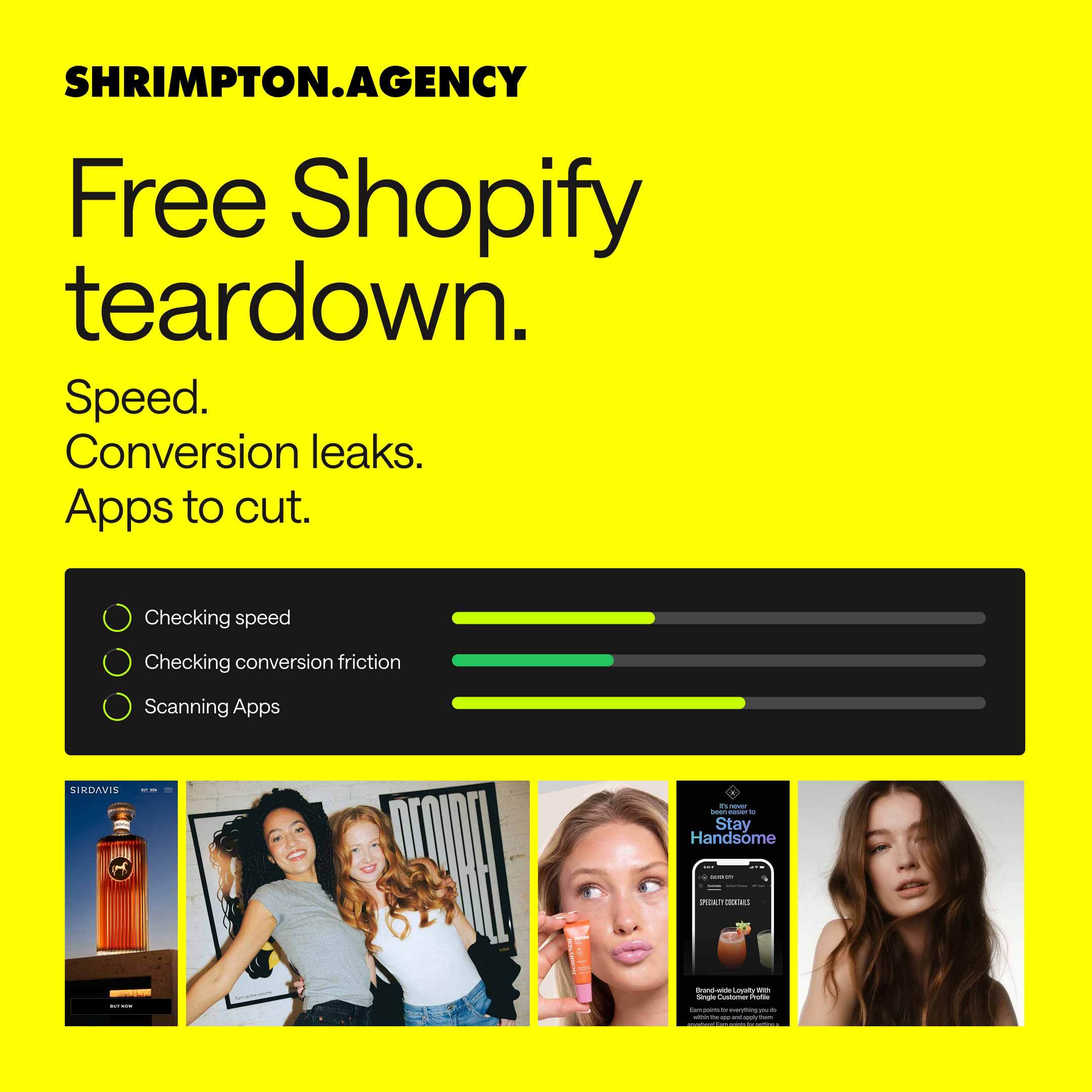
We get asked some version of the same question on nearly every new client call: “how bad is our site, actually?” Usually the honest answer takes a few hours of manual digging to back up properly. So we built a free teardown tool that gives a real, specific answer in about fifteen minutes, without a sales call attached to it.

You put in a store URL and a company website. It reads the homepage, one product page, and the cart — the three pages that carry almost all of a Shopify store’s first-session conversion risk — and flags what’s actually costing checkouts. Checkout itself isn’t tested, on purpose: checkout behavior varies too much by configuration and Shopify Plus customization to audit blind, and we’d rather under-promise than fake a result. Shopify's checkout is by default extremely robust.

What it’s actually looking at:

Speed, under real conditions. Not a synthetic lab score — load behavior on the actual homepage and PDP, the pages a paid ad or an Instagram click lands on first.

App bloat. Every Shopify store accumulates apps it no longer needs. We flag what’s adding script weight without adding value, the same audit step we run before scoping any migration or rebuild.

Friction before checkout. Cart behavior, PDP clarity, anything that makes a shopper hesitate in the seconds before they’d otherwise commit — the same territory we cover in our product page teardown for beauty and fashion brands specifically.

We built it as a tool instead of another generic checklist post because a generic checklist tells you what to look for in the abstract; a teardown tells you what’s actually wrong on your site, right now. It’s the same instinct behind the internal tooling we wrote about in The AI Tools We’re Using at Shrimpton Agency — automate the diagnostic grunt work so the time we spend with a client goes toward fixing the problem, not finding it.

Run it on your own store at teardown.shrimpton.agency. It’s free, it takes about fifteen minutes, and it isn’t a lead form in disguise — you get the findings either way.