How Headless Lost Its Head, and Put It Back On Again, Just Like Jack Skellington

How Headless Lost Its Head, and Put It Back On Again, Just Like Jack Skellington

It's Halloween 2024, you've just paid six figures for a blazing fast headless storefront, your apps don't work, your merchandiser needs a developer to change a banner, the checkout handoff is held together with gaffer tape and a Slack channel nobody reads, and somewhere a consultant is still telling you "if they've got an API you can integrate it." Spooky stuff.

That was roughly the point of How Headless Lost It's Head. Headless was over-sold, under-delivered and expensive to keep alive. Brands like Victoria Beckham Beauty went headless in 2022 and were back on a theme by 2024. We said "Don't break Shopify" and we meant it.

Then Jack Skellington wandered into Christmas Town, got hopelessly overexcited, nearly ruined everything, and came home with a better idea of who he was. Headless just did the same thing.

What actually happened

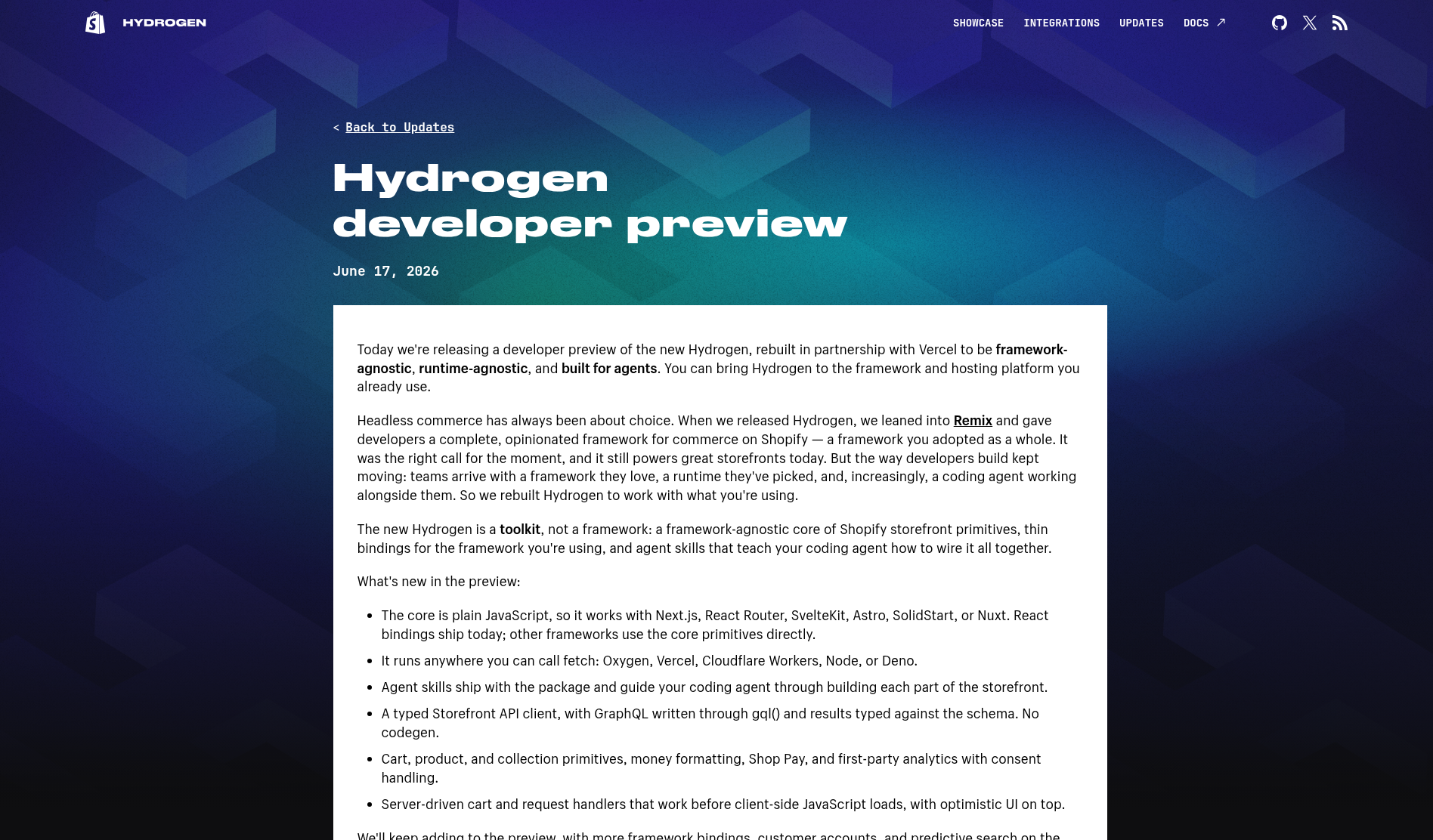
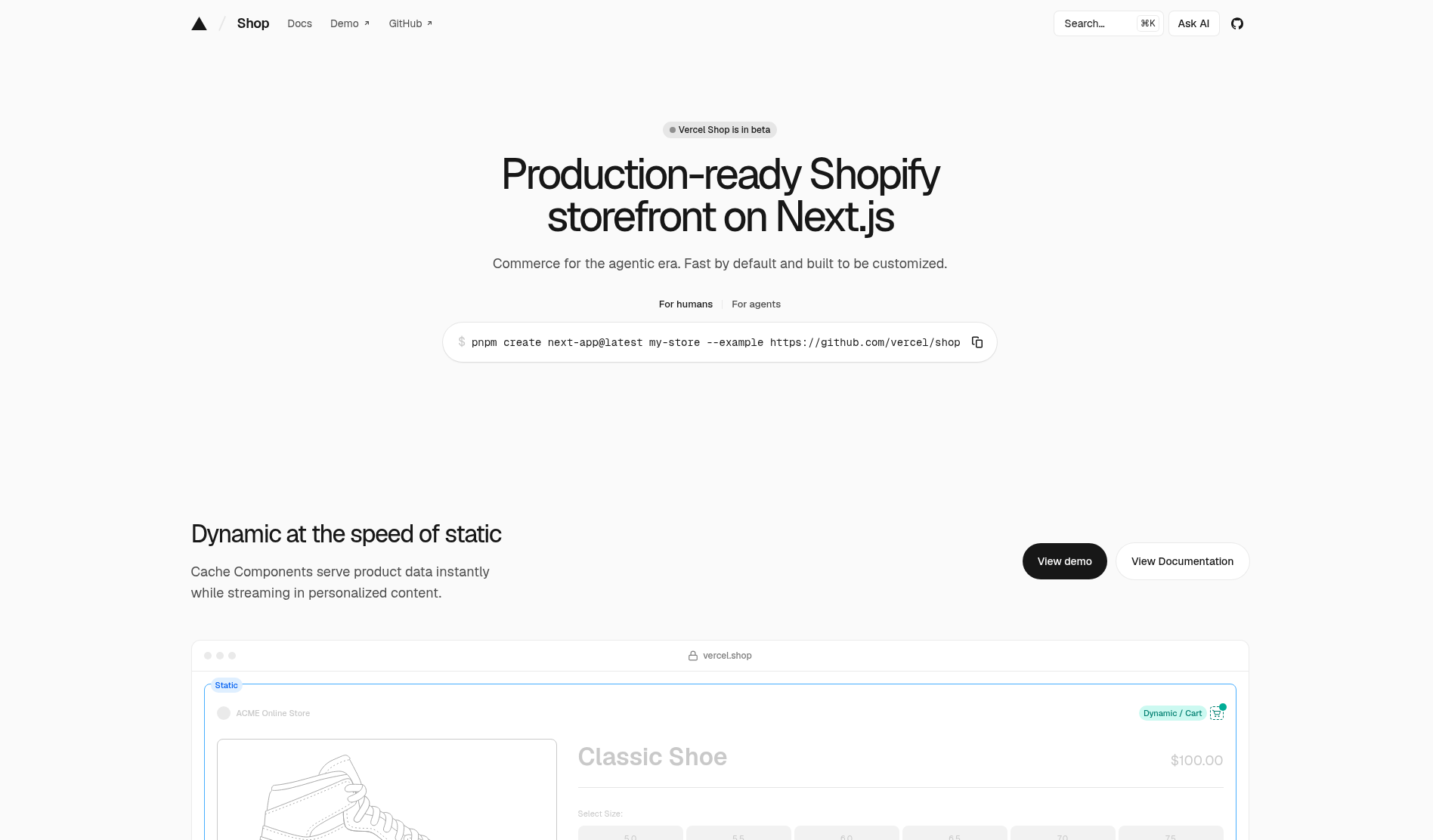
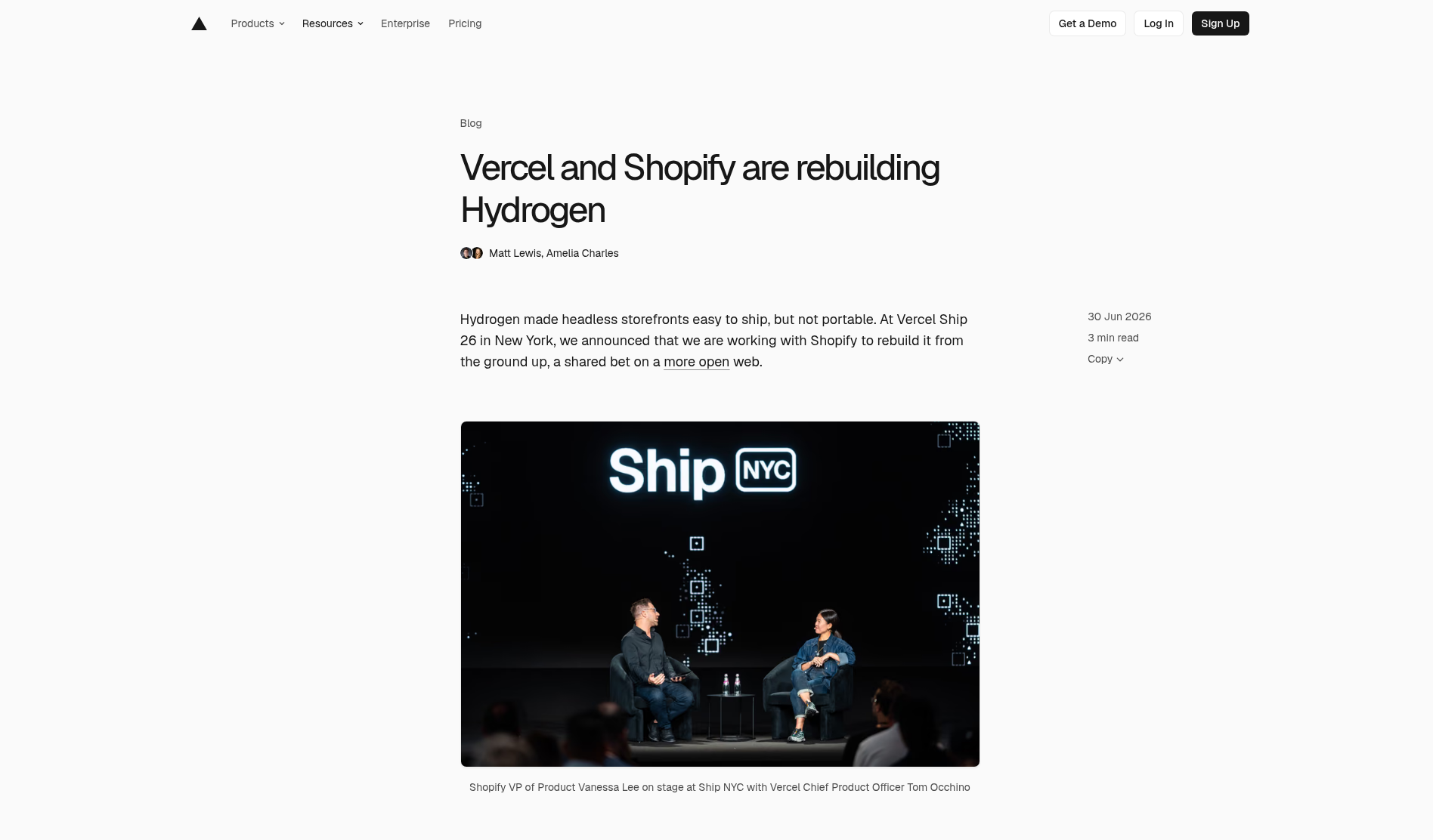
On June 17, 2026 Shopify released a developer preview of a new Hydrogen, "rebuilt in partnership with Vercel to be framework-agnostic, runtime-agnostic, and built for agents." On June 30 Vercel published its side of the story: announced at Vercel Ship 26 in New York, the two are rebuilding Hydrogen "from the ground up," open source, running "anywhere JavaScript does." Same day, Shopify switched on a one-click Deploy to Vercel button for a Next.js + Hydrogen storefront.

Translation: Hydrogen used to be a framework you had to swallow whole (Remix, then React Router, hosted on Oxygen). Shopify now openly calls that kind of opinion "a gift when it matches how you want to work, and a tax when it doesn't." The new Hydrogen is a toolkit. Shopify ships the commerce bits (a typed Storefront API client, cart, products, collections, money formatting, Shop Pay, consent-aware analytics) and your framework handles everything else, on Oxygen, Vercel, Cloudflare Workers, Node or Deno.

Vercel's own line is the most honest sentence anyone has written about headless in years: "Hydrogen made headless storefronts easy to ship, but not portable."

Yep.

Headless didn't need a bigger head. It needed one that fits.

Vercel blog: Vercel and Shopify are rebuilding Hydrogen

The stitches that matter

Most of what we moaned about in 2024 boiled down to everyone writing their own glue. Every agency, every build, its own cart, its own money formatting, its own way of mangling the checkout handoff. Vercel admits it: "until now we've each written our own bindings to the same API contract." Now that glue is centralized, so a bug gets fixed once instead of a thousand times across a thousand janky storefronts.

The bigger deal, and the one that goes after our "apps don't work" complaint, is buried halfway down Shopify's post: Hydrogen now speaks "the same commerce contract Liquid storefronts use," so "a headless store and a theme now emit the same events and accept the same actions," and "an app integrates with either one the same way." If that holds up in production, it's the single biggest reason headless broke Shopify, fixed.

Then there's the agent bit, because of course there's an agent bit. The package ships "skills" that teach your coding agent how to wire up the cart, PDPs, Markets and Shop Pay properly. Agents still need adult supervision. But Shopify's point is fair: they will happily get "money math that has to match Shopify to the cent" wrong, and you'd rather they didn't invent it from scratch.

Shopify Hydrogen developer preview update page
Vercel Shop: Next.js and Shopify storefront template (demo)

Where it still bites

This is a developer preview. Shopify's words, not ours: "The API will change." Customer accounts and predictive search are still "on the roadmap." React bindings ship today, and Vue and Svelte are "on the way." Deploying the preview to Oxygen through the Shopify CLI "isn't wired up yet." If anyone pitches you a production rebuild on this for Black Friday 2026, smile politely and back away from the pumpkin.

And none of it changes the maths. Headless is still two systems, a frontend and a CMS, plus hosting, plus a team that knows what they're doing. A typed client doesn't make your merchandiser any less reliant on a developer. Shared events don't mean every app on your stack magically has a headless version. And the Shopify checkout, with Checkout Extensibility and Markets, is still the best thing in the building. Don't fight it.

So where does headless make sense now?

Where it always should have. You have a content-heavy brand where editorial is the product. You need a proper CMS like Storyblok or Craft driving the experience. You have an in-house or agency team who'll actually own the frontend after launch. We've built and maintain headless Shopify sites in Nuxt with Storyblok and Craft, and for the right brand it's genuinely brilliant. The new Hydrogen's core is plain JavaScript and explicitly lists Nuxt, which means teams like ours no longer have to choose between Shopify's tooling and the framework we prefer. That's real progress.

Where it doesn't: a catalog store that wants to launch fast, run lean and plug in apps on a Tuesday afternoon. That's a Shopify Theme. It was in 2024 and it still is.

Our mantra hasn't changed, it's just had a costume change: "work with a platform's strengths, not against its weakness." In 2024 headless was the weakness. In 2026 Shopify and Vercel are finally building it as a strength. Pick the right one for your brand, not the one with the scariest buzzwords.

Jack got his head back on. Just don't let him run Christmas.

If you're wondering whether your storefront should go headless, come back from headless, or stay exactly where it is, drop a line to sarah@shrimpton.agency and we'll give you a straight answer.

Back to all articles