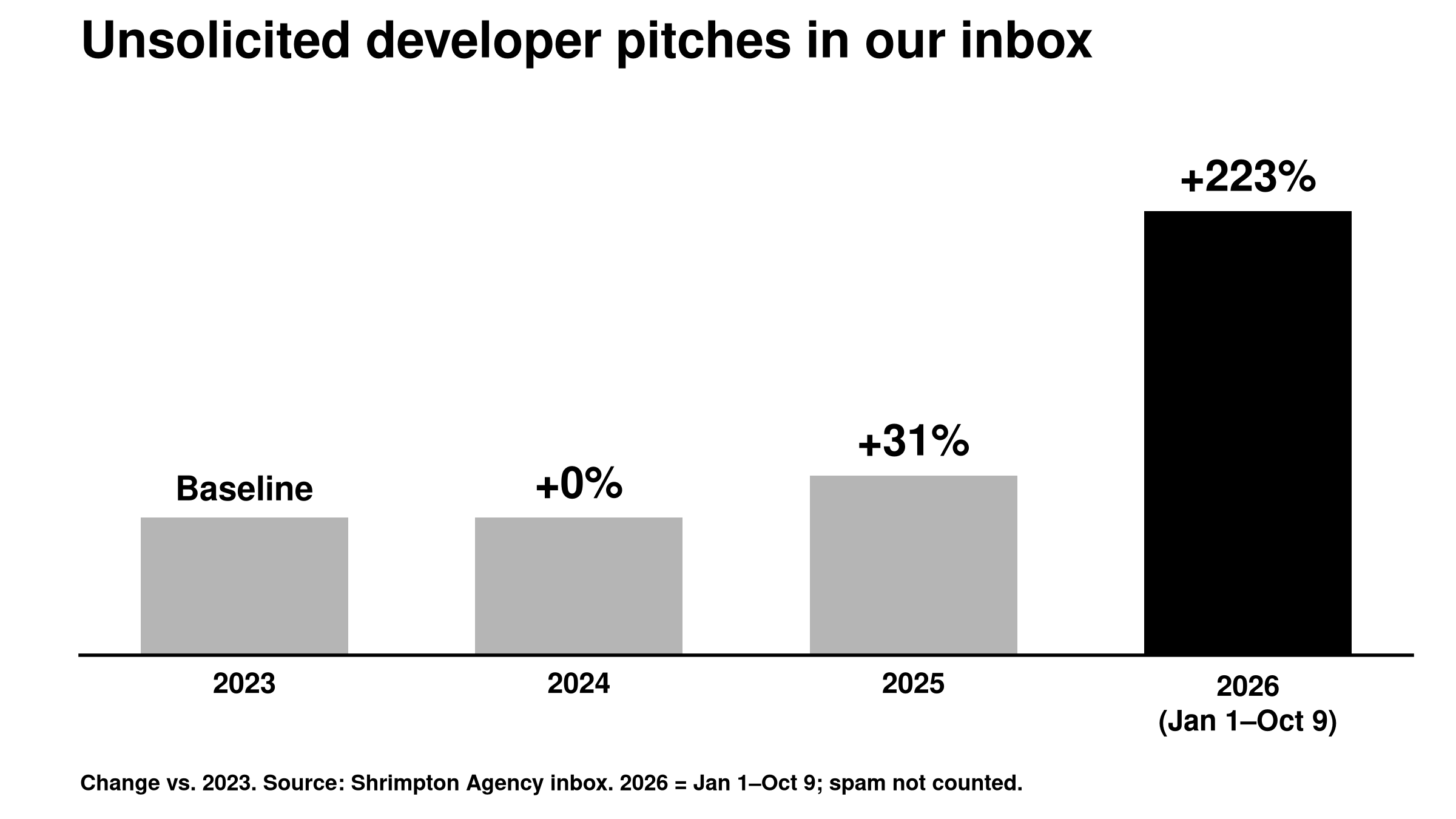
It's 2 a.m. somewhere, a stranger with a five-star profile and a stock-photo avatar just picked up your "can you move the logo 4px left" ticket, they'll fix it in five minutes, bill you $200, mark it done, and move straight on to the next brand's ticket without ever learning what you sell, who buys it or why the logo was there in the first place.
Repeat that a few hundred times and you've got a Shopify store.
Not a business partner. A store.
Random people, random places, random tickets
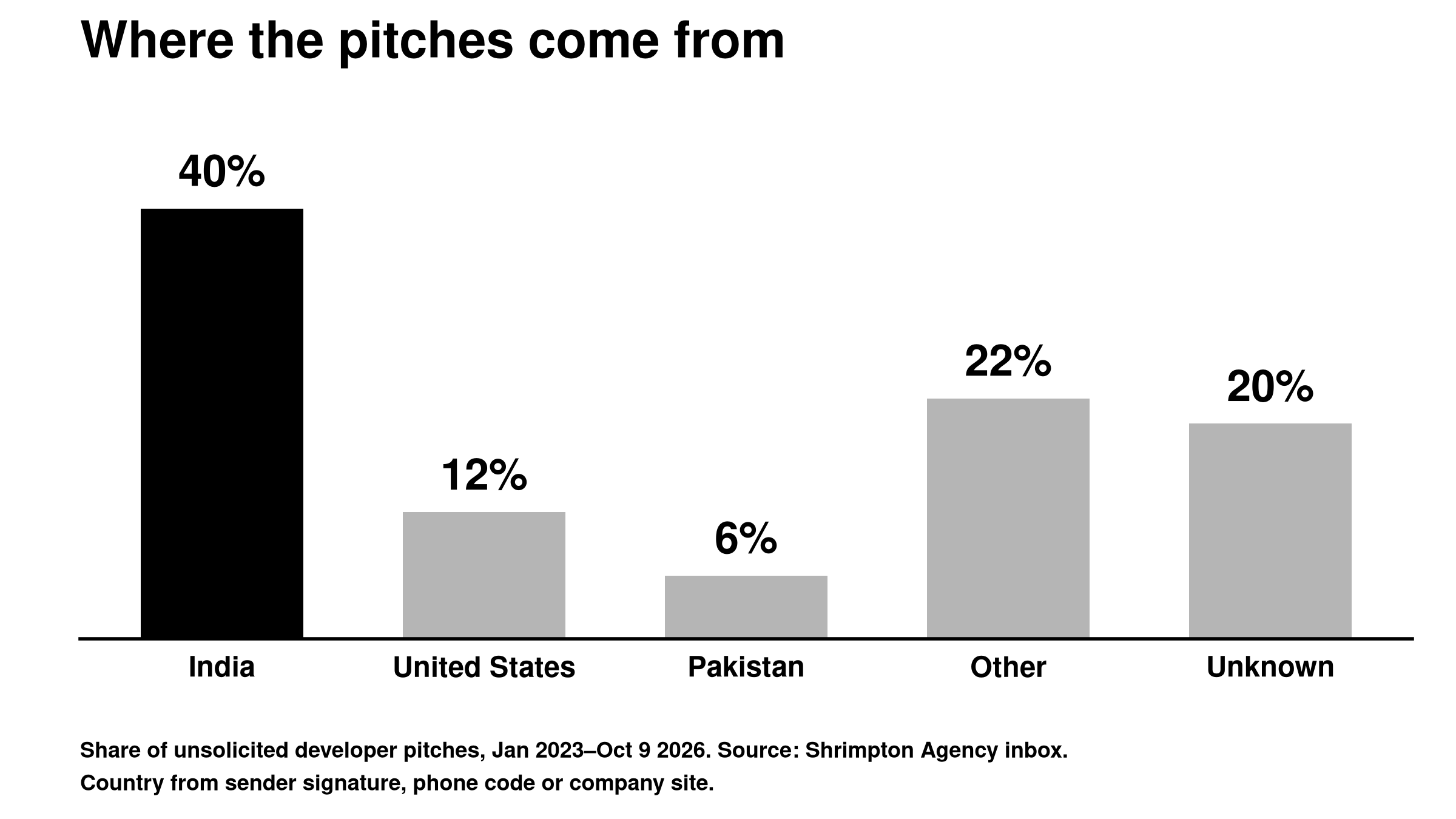
Let's be honest about what a big slice of the remote dev market became. US and UK brands got treated as a picking ground, an all-you-can-eat buffet of little jobs at rates nobody could earn at home, pulled off a marketplace by random people in random places with zero commitment to the job or the business behind it.
The goal was never your store. The goal was the next ticket.
No ownership. No documentation. No career. Just volume.
We saw this coming back in 2024, when we raised a toast to the digital nomad, who would "dance gracefully on the thin line between freedom and irresponsibility, juggling deadlines and treating time zones as mere suggestions." The ticket-pickers took that act global. And when a job goes sideways, good luck. As we wrote in The Hidden Dangers and Costs of Hiring Remote Developers in 2023, "Your ability to take legal action over an individual in another territory is close to zero."
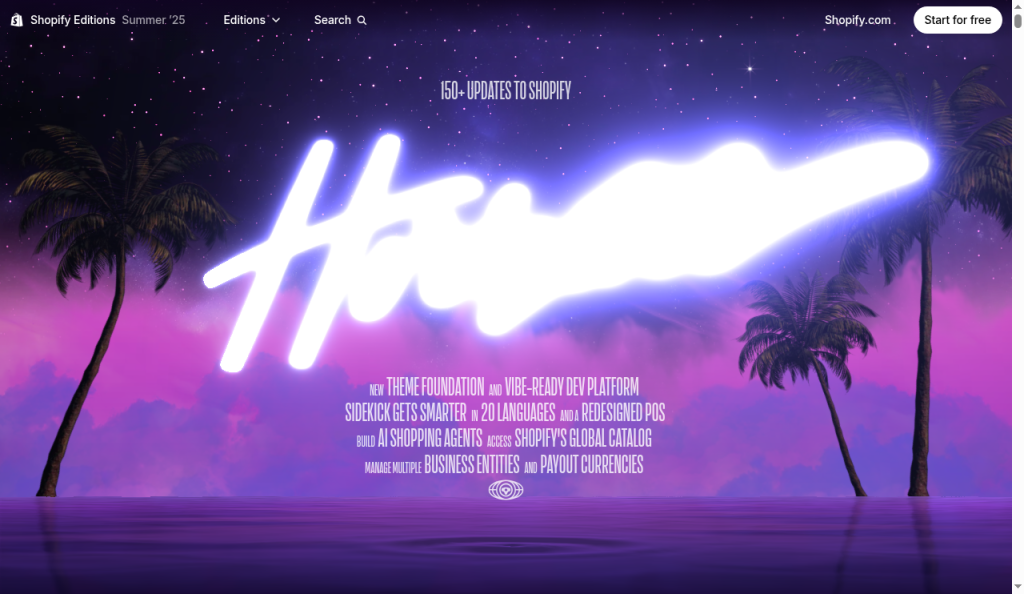
And AI just ate the volume. Within eight months of ChatGPT's launch, job posts for software, app and web development fell 20.62% on freelance platforms. Fiverr went "AI-first" and laid off 30% of its own staff, with its CEO warning, "AI is coming for your jobs." Shopify now generates theme blocks from a plain-English prompt right inside the theme editor, which is exactly the "add a section to my homepage" ticket that kept the whole buffet running.
That $200 five-minute fix? It's now a sentence you type yourself.