How New York Lost Its Agency Edge and why clients need It back.

How New York Lost Its Agency Edge and why clients need It back.

I’ve been thinking about my formative years in the New York agency scene—back when Mad Men was still on TV, “fully remote team” was basically code for "we don't have an office yet" and the people running agencies felt larger than life.

You didn’t log into Slack, you walked into rooms, forced to engage in at least a bare minimum of human interaction, sideways glancing over shoulders at 30" Apple Screens filled with colorful inspiration.

You didn’t manage workflows, you felt momentum. There was ego, sure—but also presence, conviction, and a sense that the people across the table actually knew what they were doing in a way that went beyond dashboards and deliverables.

You didn’t log into Slack, you walked into rooms, forced to engage in at least a bare minimum of human interaction. You didn’t manage workflows, you felt momentum.

People like Toni King, Trey Laird, David Lipman and Richard Christiansen weren’t responding to instructions. They were setting direction. You either bought into it or you didn’t.

The anecdotes I heard around that time might sound exaggerated now, but they’re weren't.

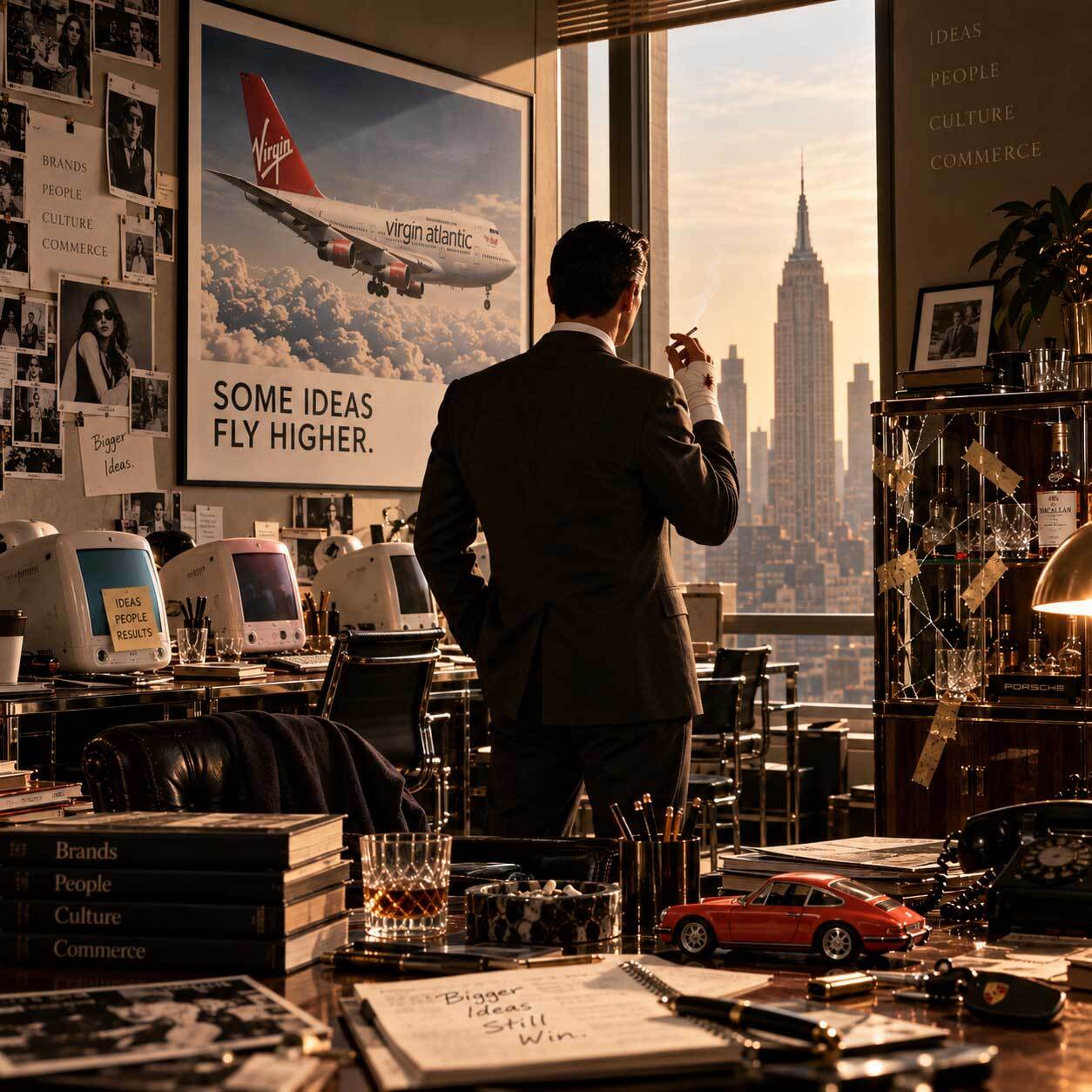
I remember hearing how Richard filled an empty office with friends and really-really-good-looking model types, sitting them behind rows of defunct Apple iMacs that weren’t even turned on, just to create a sense of agency size for a client visit.

The same instinct behind him putting a huge Boeing 747 photographic print in the waiting room to channel a Virgin Atlantic RFP: And yes, they won the job!.

Toni King walking out of a meeting with an $800,000 check to “make a website”… then heading straight to the Porsche showroom.

Or David Lipman lacerating his hand smashing up a drinks cabinet in frustration of losing a hard drive of an entire client's work... only to be told "we have a backup".

On paper, it reads like bravado. In reality, it came from something simpler: they believed in what they were doing, completely. They owned the outcome. So they acted like it.

An entire generation of clients has grown up without really experiencing that relationship with an agency. They've been taught to procure specialists, define deliverables, manage them against KPIs and keep everyone neatly inside their lane. In doing so, we've made agencies easier to manage and considerably less powerful.

And perhaps this is exactly why that old New York agency mentality feels so relevant again.

I'm not sure we need to bring back the fake employees, smashed drinks cabinets or emergency trips to the Porsche dealership. But we desperately need to bring back some of the conviction that made those stories possible.

That's the bit I think we've lost and it's the bit clients need back.